


interihotel MAD26 will bring together four interactive experiences at Xperience Lab from 17 to 19 November at IFEMA Madrid. This space is dedicated to experimenting with digital technologies applied to hotel and restaurant design. The initiative is part of Interiors Living Lab, a project by AMBIT Living Spaces Cluster, and will allow visitors to explore applications of virtual and augmented reality, generative artificial intelligence, and the digital configuration of industrialised construction systems.
Aimed at interior designers, architects, manufacturers, and hospitality professionals, the space will demonstrate how these tools can help validate decisions with clients, explore design alternatives, present projects collaboratively, and integrate products from the earliest stages of design and manufacturing.
Designing and exploring a project at 1:1 scale
The Virtual Layer allows users to define a room layout on a touchscreen and access a full-scale, three-dimensional representation using wireless virtual reality headsets. Users can incorporate furniture, lighting, materials, and finishes, and visualise changes in real time. This means that a proposal traditionally assessed through plans, renders, or samples can be experienced spatially before final decisions are made. Within the virtual environment, users can also configure products from interihotel exhibiting brands associated with AMBIT Living Spaces Cluster and generate photorealistic renders and 360-degree views to share the project.
The demonstrator is part of The Virtual Layer project, led by AMBIT Living Spaces Cluster in collaboration with Produktia.
Co-creating a space through conversation with artificial intelligence
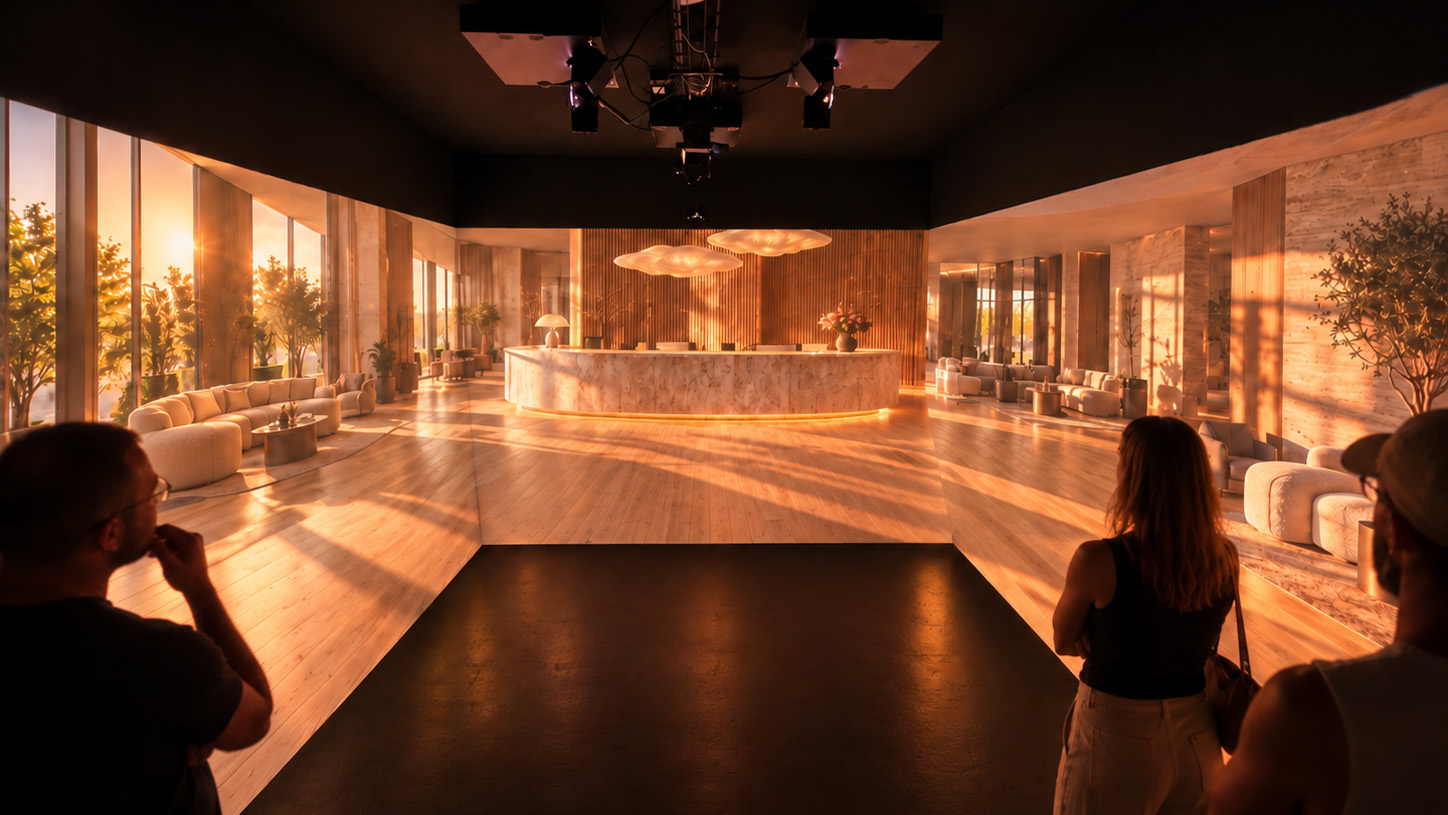
At The Co-creative Cube, visitors will be able to transform hospitality spaces using voice commands addressed to an artificial intelligence agent. The experience is based on real projects developed by architecture and interior design studios associated with AMBIT Living Spaces Cluster and published on hicontract.com. Visitors select one of these spaces and request design modifications through a conversation with the system. The agent interprets their instructions and generates a new visual proposal. The result is then converted into a three-dimensional representation using Gaussian Splatting technology and projected onto the four walls of an immersive cube. The experience makes it possible to explore design alternatives in just a few seconds and experience the results at full scale, demonstrating the potential of artificial intelligence as a co-creation tool throughout the design process.
The installation is led by AMBIT Living Spaces Cluster and developed by Framemov, with the participation of El Equipo Creativo, Verum HD, and Sezam Studio.
From the digital model to the project's interior
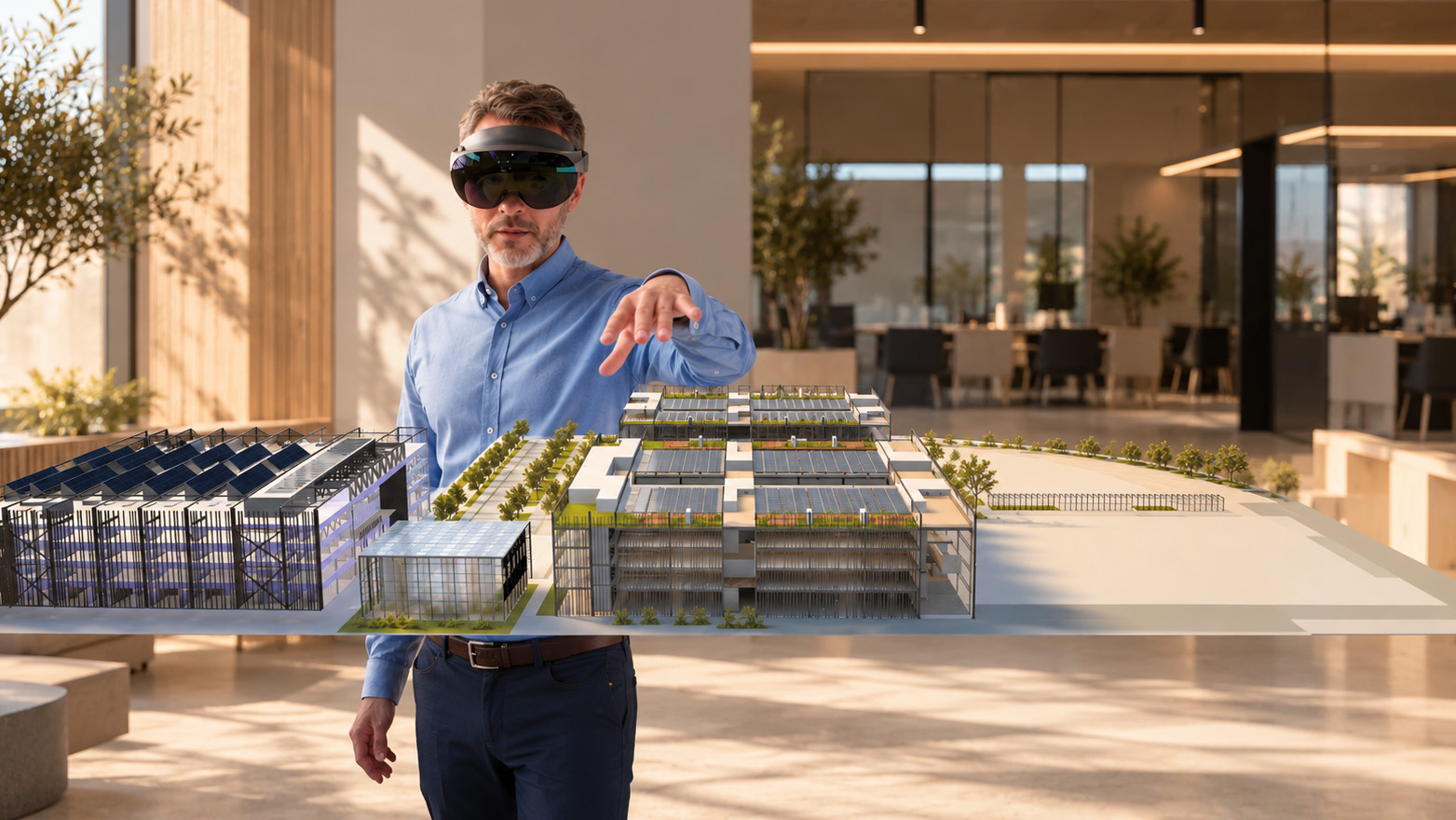
The Unfolding Maquette explores new ways of presenting and analysing projects through augmented reality. The experience begins with a three-dimensional digital model that appears integrated into a physical surface. Visitors can interact with it, select one of its spaces, and unfold it to a 1:1 scale to virtually explore its interior. Using wireless augmented reality headsets, between three and four participants can explore the same project simultaneously, discover its materials, furniture, and lighting, and access information about the exhibiting brands' products incorporated into the design. The demonstrator allows projects to be shared with clients and teams, moving from an overview of the model to an immersive spatial experience of its interiors.
The experience is led by AMBIT Living Spaces Cluster and developed by Tetravol, in collaboration with DFactory Barcelona.
Configuring for manufacturing
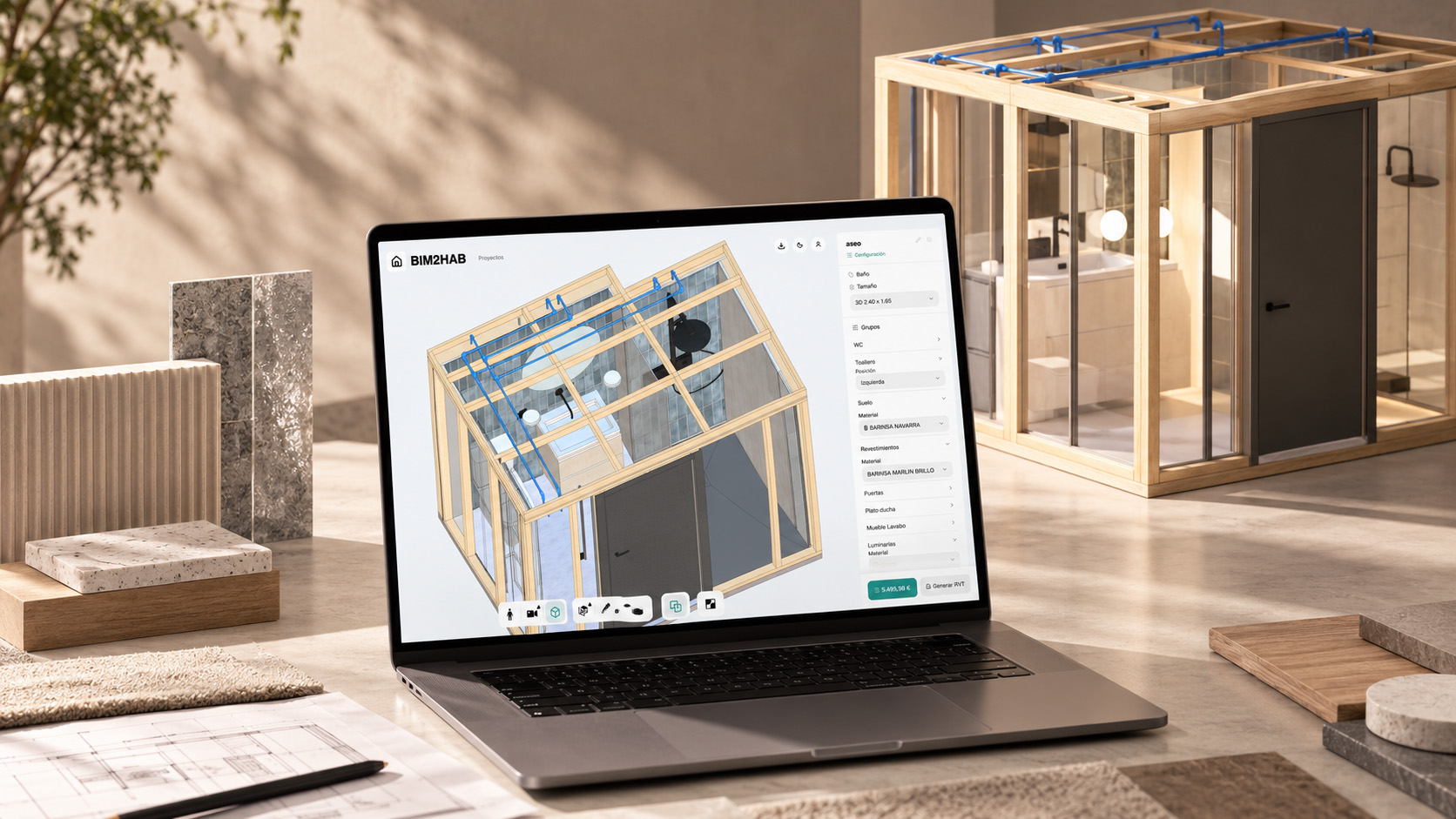
The fourth experience, The Configurable Module, brings digitalisation into the field of industrialised construction. Through a visual interface, users can configure construction modules by adjusting dimensions, components, materials, finishes, and the arrangement of different elements, while viewing the budget in real time. The demonstrator explores the application of DfMA (Design for Manufacturing and Assembly) principles, a methodology that integrates manufacturing and assembly requirements from the earliest design stages. For manufacturers of furniture, lighting, wall coverings, equipment, and building services, this approach opens up new specification opportunities by enabling their products to be incorporated directly into the digital models used to design and construct buildings.
The Configurable Module is part of BIM2HAB, a project led by AMBIT Living Spaces Cluster with the participation of WiseBuild, Lúcid, and Berrilan.
Interiors Living Lab: experimentation applied to hotel and restaurant design
Xperience Lab is part of Interiors Living Lab, a project by AMBIT Living Spaces Cluster that brings together different experimental spaces focused on hotel and restaurant design. Through initiatives combining interior design, materials, craftsmanship, and emerging technologies, this laboratory aims to explore new solutions, generate knowledge, and anticipate developments in the hospitality sector. In this edition, Xperience Lab connects four areas of activity — designing, co-creating, presenting, and configuring for manufacturing — and provides professionals with digital tools they can apply to their architecture and interior design processes.
The Virtual Layer project is supported by ACCIO through its “Cluster Cooperative Project Initiatives” programme. The BIM2HAB project has been funded by the Ministry of Industry and Tourism's support programme for Innovative Business Groups (AEI), under the 2025 Challenges call for proposals.


